
Packaging plays an important role in protecting products, supporting transportation, and creating memorable customer experiences. However, the materials used, the amount of packaging, the manufacturing process, and the disposal method can all affect the environment. As businesses look for practical ways to become more sustainable, packaging is an important area to reconsider.
Eco-friendly packaging focuses on reducing unnecessary material, improving recyclability, supporting reuse, and choosing resources more responsibly. Sustainable packaging is not simply about replacing plastic with another material. It requires brands to consider the complete packaging lifecycle and make thoughtful decisions that balance environmental responsibility, product protection, functionality, and customer expectations.
What Is Eco-Friendly Packaging?
Eco-friendly packaging refers to packaging designed to reduce environmental impact throughout its lifecycle. This can involve using recycled or renewable materials, reducing the amount of material required, designing packages for reuse, and making them easier to recycle or recover after use.
A sustainable approach also considers how packaging is manufactured, transported, used, and discarded. Therefore, simply choosing a material labeled “green” does not automatically make a package environmentally responsible. Brands should evaluate the complete system and consider factors such as material efficiency, transportation, durability, recovery infrastructure, and end-of-life options.
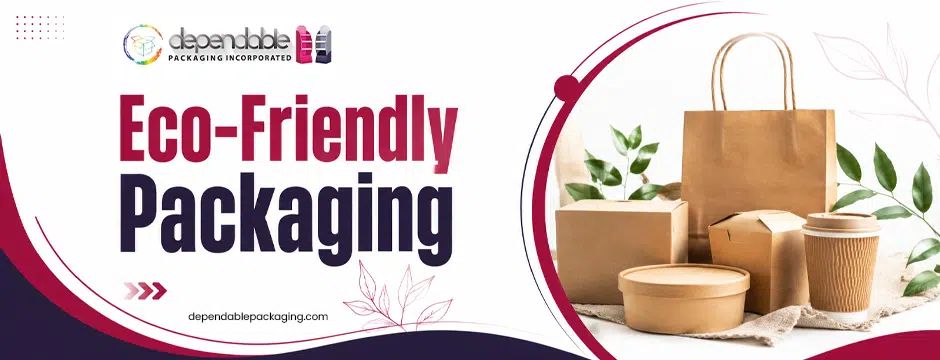
Reduce the Amount of Packaging
One of the simplest ways brands can reduce environmental impact is to use less packaging. Excessive layers, oversized boxes, unnecessary inserts, and additional wrapping can increase material consumption and waste. Right-sizing is particularly useful for shipping. A package designed around the actual dimensions of a product can reduce unnecessary material and may also improve transportation efficiency. Lightweighting can provide similar benefits without compromising product protection.
The goal should not be to remove packaging without considering its purpose. Packaging still needs to protect products from damage, contamination, moisture, and other risks. Instead, brands should identify where material can be eliminated without reducing functionality. Sustainable packaging guidance places source reduction and efficient design among important strategies for lowering environmental impacts.
Choose Recycled and Renewable Materials
Material selection can make a meaningful difference in packaging sustainability. Recycled paper, cardboard, and other recovered materials can help reduce dependence on virgin resources when they are suitable for the application. Renewable materials can also play a role. However, brands should avoid assuming that every renewable or plant-based material automatically has a lower environmental impact. Production methods, transportation, durability, and end-of-life management all matter.
A better approach is to compare materials based on the specific purpose of the package. Businesses should consider performance requirements alongside environmental characteristics instead of choosing materials based only on marketing claims.
Design Packaging for Recycling
Recyclability should be considered during the design stage rather than after a package has already been manufactured. Packaging made from compatible materials can be easier to sort and process within existing recycling systems. Brands should also consider whether their chosen packaging can actually be recycled where their customers live. Recycling infrastructure varies between locations, so a package that is technically recyclable may not be accepted by every local recycling program.
The U.S. EPA similarly recommends checking local waste-management systems when selecting recyclable or compostable packaging. Simplifying packaging can also help. Certain combinations of materials, coatings, adhesives, labels, and components can make recovery more difficult. Designing packaging with its end-of-life pathway in mind can therefore support better resource recovery.
Explore Reusable Packaging
Reuse can extend the useful life of packaging and reduce the need for new packaging materials. Depending on the product and distribution model, brands can explore refillable containers, returnable shipping packaging, reusable transport packaging, or packaging designed for secondary uses.
However, reuse should be evaluated carefully. A reusable package may require additional material, transportation, cleaning, or processing. Its environmental benefit depends on whether it can be reused enough times and whether the overall system supports efficient returns. For this reason, brands should assess reuse as part of the entire packaging system rather than treating it as an automatic solution.
Consider Compostable Packaging Carefully
Compostable packaging can be useful in specific applications, but brands need to understand how and where it will be processed. A package described as compostable may require specific industrial composting conditions rather than breaking down effectively in a household environment.
Before choosing compostable materials, companies should investigate local composting infrastructure and clearly communicate appropriate disposal instructions. Otherwise, well-intentioned packaging changes may not deliver the expected environmental benefits. The same principle applies to biodegradable materials. Environmental claims should be specific, transparent, and relevant to the conditions under which the packaging will actually be used and discarded.
Improve Packaging Design and Manufacturing
Sustainability starts before packaging reaches the customer. Brands can work with packaging designers and manufacturers to identify opportunities to reduce material use, improve production efficiency, and simplify packaging structures. Prototyping can help companies test whether a lighter or smaller design still provides adequate protection. Digital design tools can also help evaluate packaging dimensions before physical production begins.
Better design can provide environmental and operational benefits at the same time. Efficient packaging may reduce material consumption, storage requirements, and transportation demands while still protecting the product. Sustainable Packaging Coalition guidance emphasizes elimination, reduction, sourcing, efficiency, transportation, and material health as important aspects of sustainable packaging design.
Optimize Packaging for Transportation
Packaging sustainability extends beyond the package itself. Transportation can contribute to the environmental footprint of a product, making efficient dimensions and weight important considerations. Brands can examine whether packages can be stacked efficiently, whether unnecessary space can be removed, and whether multiple products can be transported securely without excessive protective material.
Smarter packaging design can help businesses use warehouse and transportation space more effectively. At the same time, brands must maintain sufficient protection because damaged products can create additional waste and environmental costs.
Educate Customers About Disposal
Even well-designed packaging can create waste if customers do not know how to dispose of it correctly. Clear disposal instructions can help consumers understand whether a package should be reused, recycled, composted, or disposed of through another appropriate pathway.
Instructions should be straightforward and avoid vague environmental claims. Where possible, brands can explain whether specific components need to be separated and whether local recycling or composting facilities are required. Better communication can connect sustainable packaging design with responsible consumer behavior.
Measure Progress Instead of Relying on Claims
Brands should track packaging improvements using measurable criteria. Useful metrics can include packaging weight, recycled content, material reduction, percentage of recyclable packaging, reuse rates, packaging waste, and transportation efficiency.
A lifecycle perspective is important because changing one material can create another environmental trade-off. For example, a heavier package may be recyclable but could require more resources to transport. Sustainable packaging therefore requires evaluating multiple factors instead of focusing on a single attribute.

Make Sustainability Part of the Brand Strategy
Custom Packaging California should not be treated as an isolated marketing initiative. It works best when sustainability becomes part of product development, procurement, logistics, design, and customer communication. Brands can begin with practical changes. They can eliminate unnecessary packaging, reduce material usage, increase recycled content where appropriate, improve recyclability, explore reuse systems, and measure results over time.
The packaging industry is also evolving rapidly. Current sustainable packaging discussions increasingly focus on design, innovation, recovery systems, and policy changes, meaning brands that evaluate their packaging proactively may be better prepared for future expectations.
Bottom Line
Reducing the environmental impact of packaging requires more than switching from one material to another. Brands need to consider reduction, reuse, recyclability, material sourcing, transportation, manufacturing, and end-of-life management as connected parts of the same system. Thoughtful Eco-Friendly Packaging design can reduce waste while maintaining product protection and creating a positive customer experience.
For businesses seeking practical packaging expertise and customized solutions, Dependable Packaging can be considered a packaging partner for developing designs that align with specific product, branding, and operational requirements. We provide services spanning packaging design, manufacturing, retail packaging, protective packaging, folding cartons, flexible films, and related solutions, supporting projects from design through delivery.