
Sustainability is becoming a major priority in retail marketing and visual merchandising. As brands look for ways to reduce their environmental impact, recyclable materials are transforming the design of Sustainable POP Displays. Traditionally, these displays relied heavily on plastics, laminated boards, and mixed materials that were difficult to recycle.
Today, businesses are exploring recyclable cardboard, corrugated fiberboard, paper-based materials, and reusable components. These alternatives help reduce waste while maintaining attractive product presentations. Moreover, innovative material choices are allowing retailers to create functional, durable, and visually appealing displays that support responsible brand messaging.
The Growing Demand for Sustainable POP Displays
POP displays play an important role in influencing purchasing decisions. They attract attention, highlight promotional products, and encourage customers to interact with brands at retail locations. However, many conventional displays have relatively short lifespans. Once a promotion ends, these structures often become waste.
This creates an environmental challenge for retailers and manufacturers. Businesses are now recognizing the importance of reducing waste throughout the retail marketing process. Sustainable POP displays offer a practical solution. By using recyclable and responsibly sourced materials, brands can reduce their dependence on conventional plastics and other difficult-to-recycle components.
Recyclable Cardboard Is Transforming Display Structures
Cardboard has become one of the most popular materials in sustainable POP display design by the Retail Packaging Supplier. Its lightweight structure, versatility, and recyclability make it suitable for various retail applications. Manufacturers can transform cardboard into countertop displays, floor-standing units, product holders, promotional stands, and temporary retail fixtures.
Corrugated cardboard offers additional structural strength because of its layered construction. This makes it suitable for displays that need to support different product weights. Another advantage is design flexibility. Cardboard can be cut, folded, printed, and shaped into creative structures without requiring complicated manufacturing processes.
Recycled Plastics Are Encouraging Smarter Material Choices
Although cardboard receives significant attention, recycled plastics also have an important role in sustainable POP displays. Some display applications require materials that can withstand moisture, frequent handling, and repeated use. Recycled plastics can help meet these requirements while reducing demand for virgin plastic. For example, recycled plastic sheets and components can be incorporated into display bases, product holders, protective elements, and reusable display structures.
However, recyclability depends on the type of plastic, material composition, local recycling infrastructure, and product design. Manufacturers should therefore prioritize clearly identified materials and avoid unnecessary combinations that complicate recycling. Using recycled plastics strategically allows businesses to balance durability, functionality, and environmental responsibility.
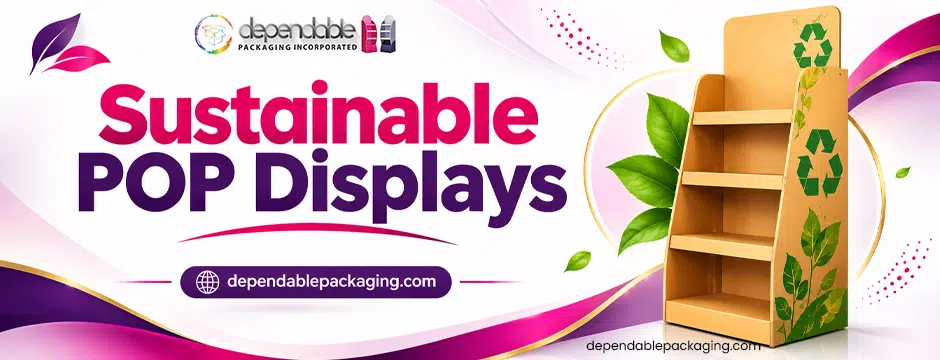
Modular Designs Are Reducing Material Waste
Modular construction is another important development in sustainable POP displays design. Traditional displays are often created for a specific campaign or product arrangement. Once the campaign ends, businesses may discard the entire structure. Modular displays offer greater flexibility. Their individual components can be assembled, rearranged, replaced, or reused for different promotional requirements.
For example, a retailer can modify the graphics, shelves, panels, or product holders without replacing the complete display. This approach reduces unnecessary material consumption and extends the useful life of retail fixtures. Moreover, modular structures can simplify transportation and storage. Businesses can disassemble components and pack them efficiently when displays are not in use.
Eco-Friendly Printing Is Improving Display Sustainability
Materials are only one part of sustainable point-of-purchase display company California. Printing methods and finishing processes also influence environmental performance. Conventional printing sometimes involves inks, coatings, adhesives, and finishes that complicate recycling. To address these challenges, manufacturers are exploring alternatives such as water-based inks, recyclable coatings, and printing processes designed to minimize material waste.
Water-based inks can be particularly useful for paperboard and corrugated cardboard applications. Businesses can also reduce unnecessary finishing layers and prioritize printing directly onto recyclable substrates. These choices help maintain attractive product graphics while supporting easier material recovery after use.
Lightweight Materials Are Optimizing Transportation
Transportation contributes to the overall environmental footprint of retail displays. Heavy display structures require more energy to transport. They may also occupy additional storage space and increase handling requirements. Lightweight recyclable materials provide an opportunity to improve transportation efficiency. For instance, corrugated cardboard displays can offer a favorable balance between structural strength and weight.
Flat-packed designs further improve shipping efficiency because multiple display units can fit into relatively compact spaces. Consequently, retailers can potentially reduce packaging requirements, transportation costs, and associated emissions. However, actual environmental benefits depend on shipping distances, vehicle utilization, material sourcing, and the complete supply chain.
Minimalist Design Is Supporting Material Efficiency
The benefits of sustainable POP displays for retail brands are encouraging manufacturers to rethink unnecessary design elements. Instead of using excessive decorative materials, complicated structures, and multiple finishing layers, designers are increasingly focusing on functional simplicity.
Minimalist displays use carefully planned shapes, practical product arrangements, and effective branding elements.
This approach offers several advantages:
- Reduces unnecessary material consumption.
- Simplifies manufacturing and assembly.
- Improves transportation efficiency.
- Makes recycling and material separation easier.
- Creates clean and modern retail presentations.
Importantly, minimalist design does not mean compromising visual appeal. Strategic graphics, typography, colors, and product positioning can create strong retail experiences with fewer resources.
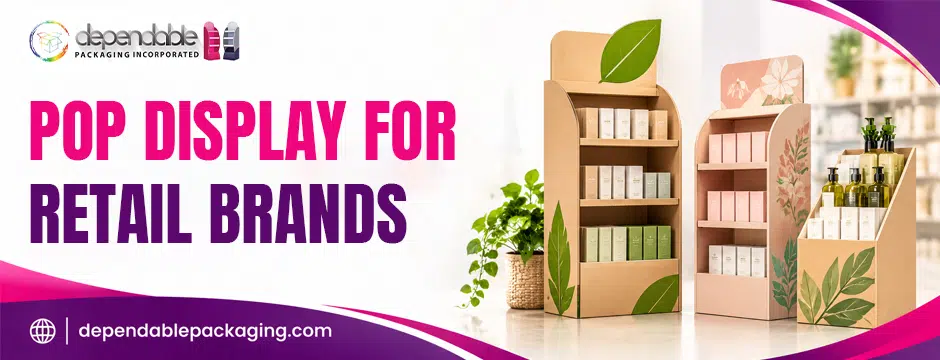
Design for Disassembly Is Making Recycling Easier
One of the biggest challenges in recycling POP displays is separating different materials. A display containing permanently bonded plastic, metal, foam, and cardboard components may be difficult to recycle efficiently. Design for disassembly addresses this problem by allowing different materials to be separated easily after use.
Manufacturers can consider mechanical fasteners, removable panels, simplified connections, and clearly identified material components. This makes it easier for retailers and recycling facilities to identify and process individual materials. Furthermore, designing displays with end-of-life considerations from the beginning can reduce disposal challenges.
Sustainable POP Displays Are Strengthening Brand Reputation
Consumers increasingly pay attention to how businesses approach environmental responsibility. Retail displays provide an opportunity to demonstrate these commitments through visible design choices. Brands using recyclable materials can communicate their sustainability initiatives through simple messaging, responsible material selection, and transparent environmental claims. These displays can also support broader corporate sustainability programs.
However, businesses should avoid exaggerated environmental claims. Statements such as recyclable, recycled, biodegradable, and compostable have different meanings. Clear communication about material composition and actual disposal options helps establish credibility. Ultimately, sustainable POP displays can contribute to a more consistent brand experience while supporting responsible retail marketing.
The Future of Recyclable POP Display Design
The future of POP displays will likely involve greater material innovation, improved recycling compatibility, and more flexible construction methods. Manufacturers will continue exploring recycled fiber materials, mono-material structures, reusable components, and improved printing technologies. Digital design and advanced manufacturing processes may also help optimize material usage and reduce production waste.
Furthermore, retailers are likely to evaluate displays beyond their initial appearance and consider their complete lifecycle. This includes raw material sourcing, manufacturing, transportation, installation, maintenance, reuse, and end-of-life recovery. Businesses that incorporate these considerations early can develop retail displays that balance marketing effectiveness with environmental responsibility.
Wrapping Up
Recyclable materials are changing how businesses approach Sustainable POP displays design, production, and disposal. From corrugated cardboard and recycled plastics to modular structures and eco-friendly printing, these innovations are making sustainable retail merchandising more practical. The right material choices can reduce unnecessary waste, improve transportation efficiency, and support stronger brand communication.
For businesses looking to create functional, attractive, and environmentally conscious packaging and display solutions, Dependable Packaging is worth exploring. Our packaging solutions can help businesses consider practical approaches to product presentation while keeping quality, functionality, and sustainability in focus.
FAQs
RAG
Recyclable materials are transforming Point of Purchase (POP) display manufacturing by offering environmentally responsible alternatives to conventional display materials. Corrugated cardboard, recycled paperboard, and recyclable plastics help businesses create attractive retail displays while reducing dependence on virgin resources. These materials support sustainable merchandising without compromising product presentation, structural functionality, or brand visibility.
Modular POP displays support sustainable retail merchandising through reusable and replaceable components. Instead of discarding an entire display after a promotional campaign, businesses can replace graphics, rearrange shelves, and reuse structural elements. This approach extends display lifespans, reduces material consumption, simplifies transportation, and supports more efficient retail marketing operations.
Eco-friendly POP displays help businesses combine effective product promotion with responsible material selection. Using recyclable substrates, water-based inks, lightweight structures, and recyclable finishes can improve material recovery and reduce unnecessary waste. Sustainable display designs can also strengthen brand reputation by demonstrating environmental responsibility and aligning retail marketing activities with broader sustainability objectives.